I Press a Key Then Have to Wait a Few Seconds Before Presing It Again for It to Work
Z7_3054ICK0KGTE30AQO5O3KA30N0
hp-concentra-wrapper-portlet
 Actions
HP Desktop PCs - Wired Keyboard Troubleshooting (Windows 7)
This document applies to HP and Compaq desktop PCs with Microsoft Windows 7.
Use this information to troubleshoot common keyboard problems.
note:You can test the keyboard for key or hardware failures using HP Hardware Diagnostic tools that come with your calculator.
Stuck primal
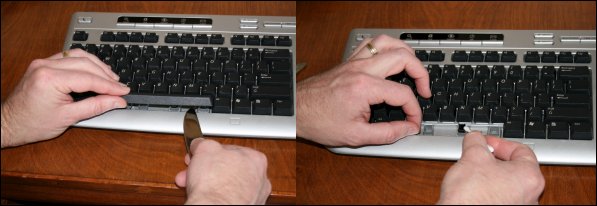
If a key is physically stuck in the down position, you might not have to supersede the keyboard. Most keys tin be easily removed by inserting a butter knife under the key and prying up. Later on the cardinal has been removed, using a swab with booze, clean the underside of the key and the key'south slot in the keyboard. Supervene upon the primal by snapping it back into place.
Other tips to think nearly when encountering a stuck cardinal:
-
Turn off the computer before working on the keyboard.
-
If the keyboard is yet under warranty and the fundamental is stuck, y'all might want to contact HP to see if the keyboard can be replaced before removing a cardinal. If the cardinal is stuck due to liquid or other substance getting into the keyboard, cleaning might exist the only option.
-
Longer keys such as the Infinite and Return probably take a small metallic rod for support. This rod must be inserted into the key and keyboard before replacing the central into the keyboard.
-
Keys on thin wireless keyboards, such equally those used by HP TouchSmart IQ Serial PCs can be more difficult to supplant. Think about replacing the keyboard for these types of keyboards.
Pressing a key in one case types several characters
If two or more characters announced when pressing a key once, use the following steps to adjust the key echo delay in Windows 7:
-
Click Showtime
 , and type keyboard in the Search box. Then click Keyboard under Command Panel.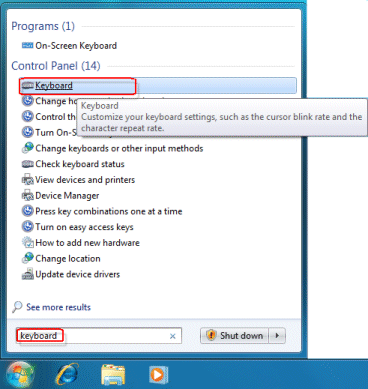
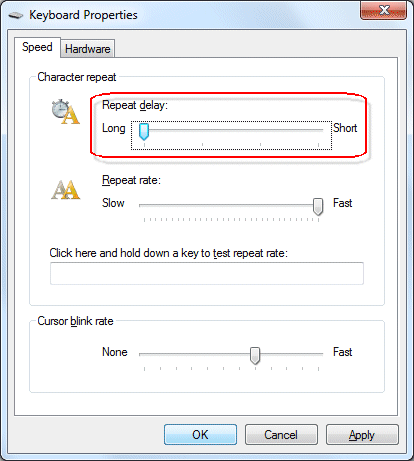
The Keyboard Backdrop page opens.
-
Set the Repeat filibuster slider to Long. Click Apply, then click OK.
Figurer beeps while typing
If the computer sometimes beeps while you are typing, Toggle keys or Sticky keys are active. The Toggle Keys can emit a beep when the Lock keys are pressed. The Sticky Keys function can emit a beep when the Ctrl, Alt, Shift, and Lock keys are pressed. Utilize the following steps to disable Toggle Keys in Windows 7:
-
Click Outset
, and type Ease into the Search box. And so select Ease of admission in the Programs listing.
-
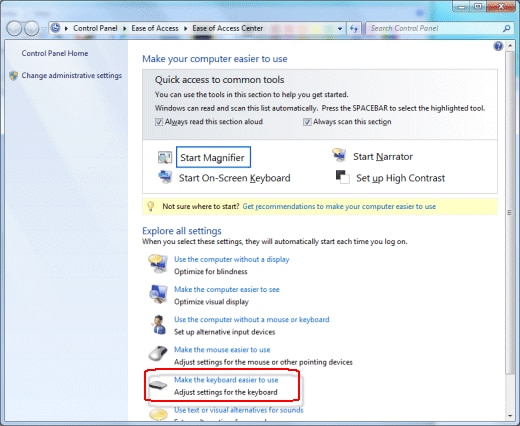
Curl down the page and select Make the keyboard easier to utilise.
-
If selected, remove the pick from Turn on Sticky Keys. Then click Set up Viscid keys.
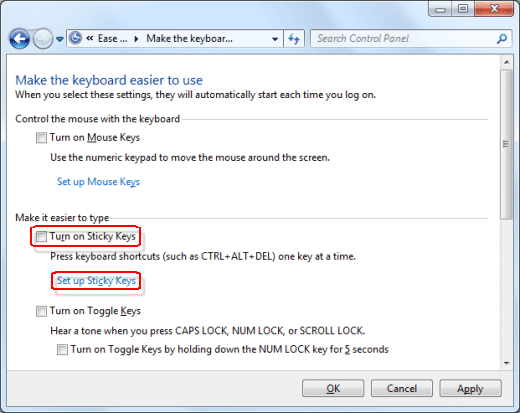
The Set upwards Mucilaginous Keys page opens.
-
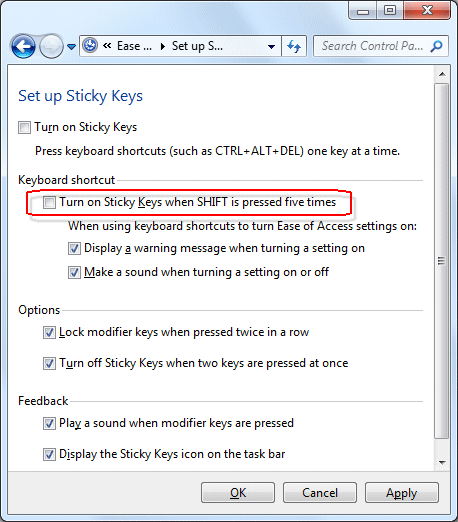
Remove the selection from Turn on Gummy Keys when SHIFT is pressed five times.
-
Click Apply, and so click OK to render to the Make the keyboard easier to utilize page.
-
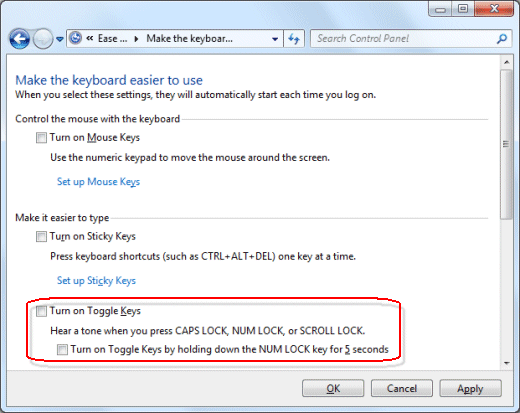
Remove the selection from Turn on Toggle Keys.
If selected, remove the selection from Plough on Toggle Keys by property down the NUM LOCK cardinal for v seconds.
-
Click Apply, click OK, and and then shut the Ease of Access Centre.
The beeps no longer sound.
Key presses are slow to respond
If at that place is a short delay from the fourth dimension a key is pressed to the fourth dimension the graphic symbol displays on the screen, the Filter Keys function might be activated. The Filter Primal function provides a greater range of central press options to fine tune key delays and preclude inadvertent key presses. To disable Filter Keys in Windows 7 and render to the default keyboard beliefs, employ the following steps:
-
Click Start
, and type Ease into the Search box. Then select Ease of access from the Programs list. -
Scroll downward the page and select Make the keyboard easier to employ.
-
Remove the choice from Turn on Filter Keys. Then click Prepare Filter Keys.

-
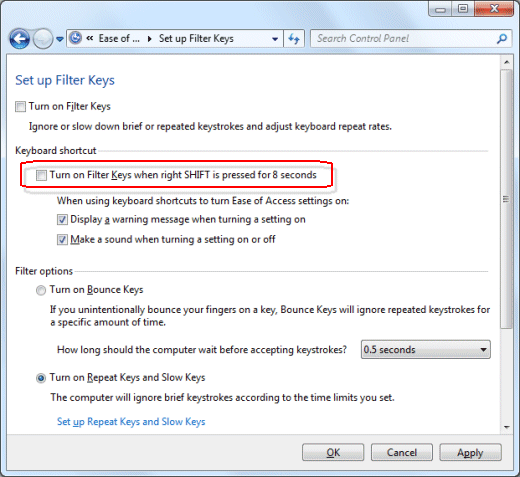
On the Set upward Filter Keys page, remove the selection from Turn on Filter Keys when SHIFT is pressed for 8 seconds.
Figure : Changing the Filter key settings
-
Click Apply, click OK, and then shut the Ease of Access Middle.
The keys should be more responsive.
Incorrect characters appear when typing, changing keyboard language, or Dvorak
If the wrong characters appear when you are typing, or you are trying to utilise a different keyboard, use the following steps to synchronize Windows vii to the type of keyboard yous are using:
-
Click Beginning
, and type region into the Search field.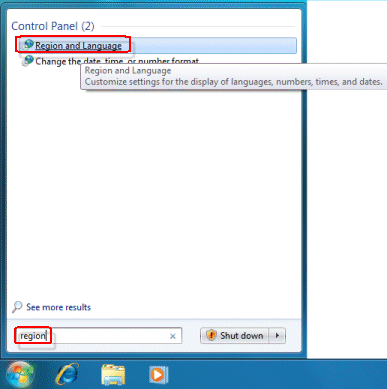
-
Click the Keyboards and Languages tab, and and so click Change Keyboards.
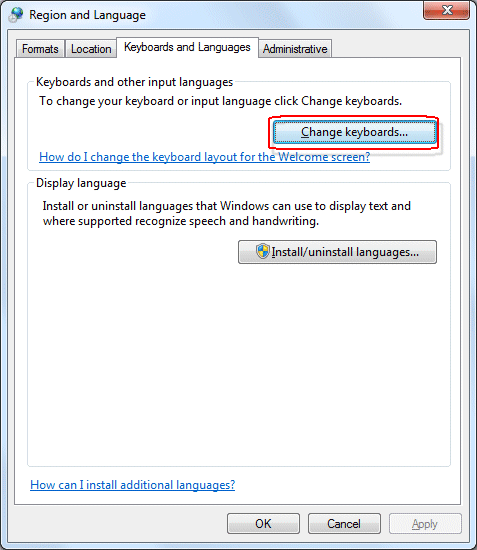
The Text Services and Input Languages folio opens.
-
Click Add.
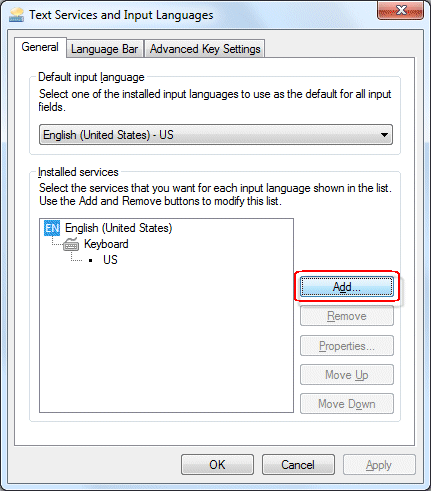
-
Select the keyboard y'all desire to use, and click OK.

-
From the Text Services and Input Languages page, select the new keyboard in the list and click Motility up until information technology is kickoff in the list. This makes information technology the default keyboard.
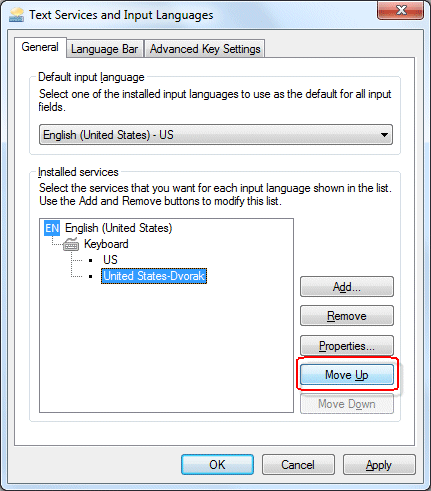
-
Click OK. You can now employ the new keyboard. If you find that the new keyboard works correctly and y'all practice non want to use the other keyboard, repeat these steps and Remove the keyboard that yous do not demand from the General tab of the Text Services and Input Languages window.
Keyboard does not work
Before troubleshooting the keyboard, find out what kind of wired keyboard you accept by looking at the end of the keyboard cablevision and comparing it to the post-obit images:
| Keyboard connector type | Keyboard connector image |
| PS/2 | |
| USB | |
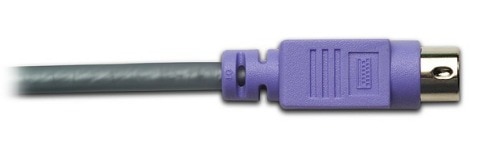
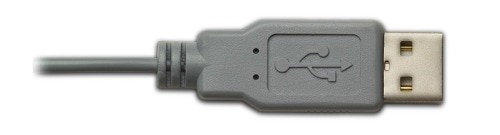
If the keyboard has stopped responding, press the Ctrl + Esc keys at the same time and note what happens:
-
If the Windows Start menu opens, the keyboard is working and the software that yous are using has stopped responding. Select the software plan using the mouse arrow and press Alt + F4 at the same time to close the program that has stopped responding.
-
If the Windows Start menu does not open, the keyboard or operating system has stopped responding. Utilise the steps that follow to check connections and synchronize the keyboard to the BIOS and Windows.
Reset the keyboard in Windows 7
-
Shut down the computer (do not restart).
-
With the computer fully off, disconnect all devices continued to the computer except for the monitor.
-
For PS/ii keyboards, audit the connector at the end of the keyboard cablevision. If you find pins that are bent, effort to straighten the pins with the tip of a retracted ball-point pen. If pins are bent beyond repair or are broken, supercede the keyboard. Make sure any broken pins are not lodged inside one of the holes in PS/two connector on the computer. If so, the broken pin must be removed from the hole before some other keyboard tin can be connected.
-
Reconnect the keyboard. For USB keyboards, connect the keyboard into a USB connector on the back of the estimator that was not previously used.
-
With only the Keyboard and monitor connected, turn on the computer. Let Windows open to the Windows Desktop, printing the Ctrl + Esc keys at the same time, and note what happens:
-
If the Windows Get-go carte du jour opens, the keyboard is at present working. At that place was a connection problem. Use the arrow keys to shut down the computer. Reconnect your other devices, including the mouse.
-
If the Windows Start card does not open, the keyboard might exist bad. Connect the keyboard to another computer to see if information technology is bad. Supplant the keyboard if information technology does not work another computer. If the keyboard works on another estimator, shut down your computer and go along using these steps:
-
-
Reconnect the keyboard to the computer.
-
Turn on the computer and immediately begin pressing the F8 key repeatedly until an Advanced Boot Options screen displays.
-
Select Safe Mode, and press Enter.
If a login page opens, log in to your computer using a user business relationship that has ambassador rights. If you do not know your password, press Enter.
Windows opens in Safe Mode.
-
Click Showtime
, type device manager into the Search field, and printing Enter.
Device Manager opens.
-
Click View and select Show Hidden Devices.
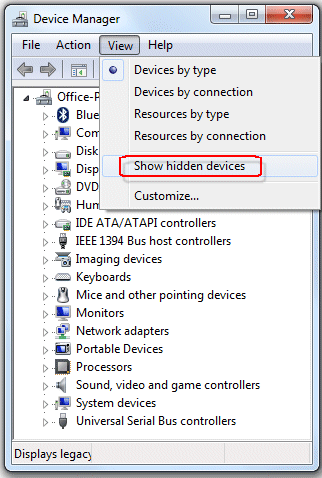
-
Click the pointer next to Keyboards, right-click a keyboard device name listed nether Keyboards, and then click the Uninstall push to remove the device from Windows.
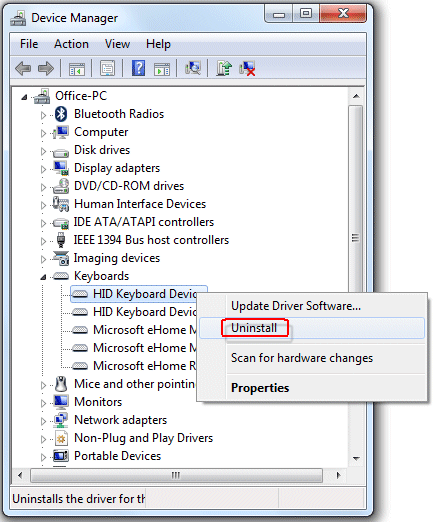
-
Continue removing device names in the Keyboards category until all device names have been uninstalled.
-
Leave the keyboard connected to the estimator and restart the computer.
Source: https://support.hp.com/us-en/document/c01857700
0 Response to "I Press a Key Then Have to Wait a Few Seconds Before Presing It Again for It to Work"
Post a Comment